
1G refers to the first generation of wireless cellular technology (mobile telecommunications). These are the analog telecommunications standards that were introduced in the 1980s and continued until being replaced by 2G digital telecommunications. The main difference between these two mobile cellular generations is that the audio transmissions of 1G networks were analog, while 2G networks were entirely digital.
Although both systems use digital signaling to connect the radio towers (which listen to the handsets) to the rest of the telephone system, the voice itself during a call is encoded to digital signals in 2G whereas 1G is only modulated to higher frequency, typically 150 MHz and up. The inherent advantages of digital technology over that of analog meant that 2G networks eventually replaced them everywhere.
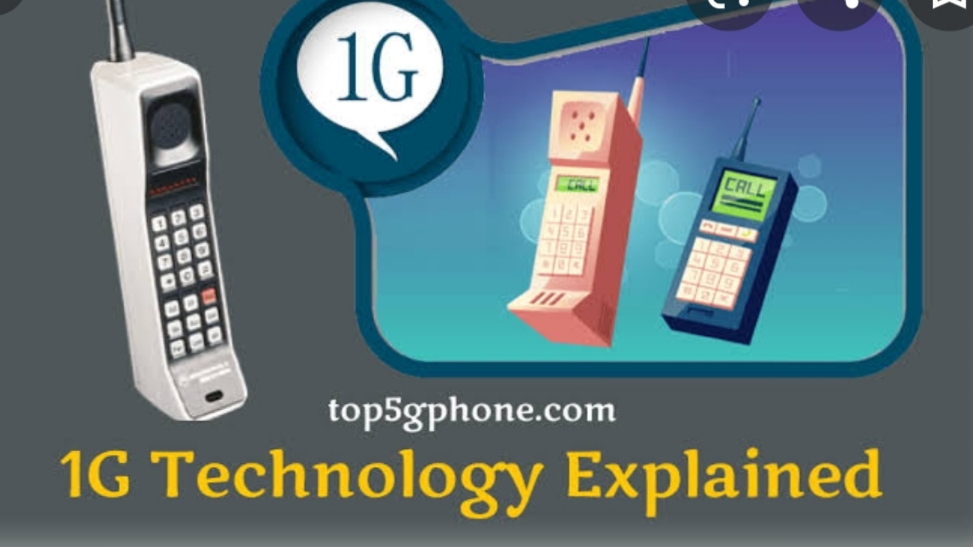
The first commercially automated cellular network (the 1G generation) was launched in Japan by Nippon Telegraph and Telephone (NTT) in 1979, initially in the metropolitan area of Tokyo. Within five years, the NTT network had been expanded to cover the whole population of Japan and became the first nationwide 1G network.
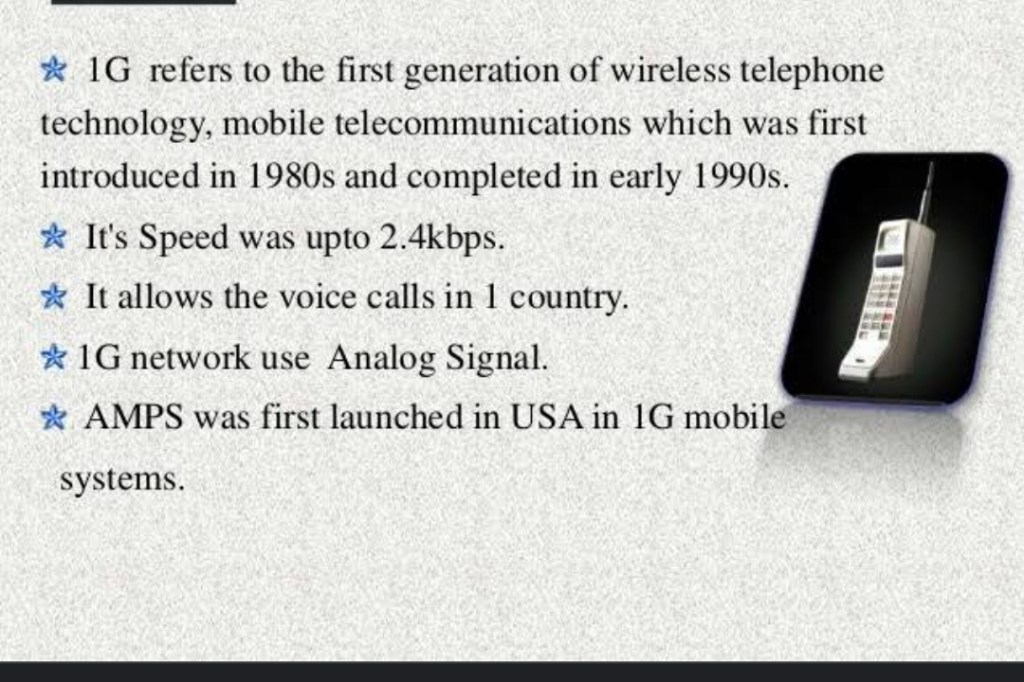
In 1981, the NMT system simultaneously launched in Denmark, Finland, Norway and Sweden. NMT was the first mobile phone network to feature international roaming. In 1983, the first 1G network launched in the USA was Chicago-based Ameritech using the Motorola DynaTAC mobile phone. Several countries then followed in the early to mid-1980s including the UK, Mexico and Canada.
As of 2021, a limited NMT service in Russia remains the only 1G cellular network still in operation

Presented by
(S) TECHNOLOGY
 (S) TECHNOLOGY